
Sales pipeline evaluation should not rely solely on technology. Instead, it must address underlying process flaws and human factors. Simply implementing a new CRM or updating a sales tool will not fix a broken pipeline if the sales team lacks alignment, motivation, or proper execution.

How growing businesses are promoting CRM adoption through genuine inquiry, servant leadership, and an improved approach to data management.
Sometimes, the sales team "just wants to sell" and not deal with technology. That reaction is totally understandable when the CRM has been set up based on requirements from the executive team without input from the sales reps.
A common pitfall is expecting a new CRM or automation software to magically fix a broken sales pipeline. Technology is merely a supportive structure. It cannot repair systemic issues if the team delivering the process is unaligned, unmotivated, or failing to execute their roles.
Though the proper sales process evaluation involves numerous steps, this article highlights four essential elements for a successful strategy.
1. Internal Sales Interviews Using a Socratic Approach
To gain user adoption of your CRM, the process should begin with deep inquiry to uncover the real issues and needs of the sales team. Leaders can hire an outside party, if necessary, to gather this information. Whether this is handled in-house or with outside support, user experience interviews that follow a Socratic approach will yield the most productive results.
The goal is to uncover friction points in the sales pipeline and selling experience. When you interview everyday users (usually the sales reps), the best approach is to assume nothing. Use a Socratic approach – meaning strictly questioning and listening without inserting your own biases. This method encourages users to reflect on their own experiences, revealing hidden pain points and unmet needs that might not surface in traditional surveys or top-down feedback sessions.
Servant Leadership: This inquiry process is deeply aligned with the principles of servant leadership. Instead of imposing solutions or pushing a preconceived CRM strategy, a servant leader prioritizes listening, empathy, and understanding. When you allow the sales reps to be the center of the conversation, it shows you value their insights, respect their expertise, and genuinely want to understand their challenges.
When sales reps see that their leader is truly invested in their success and not just in implementing a tool, then adoption becomes more natural and sustainable.
After identifying friction points, the leader fixes the CRM interface and creates a training program. They may also offer coaching, provide resources, and ensure that ongoing changes are implemented with input from the users. This continuous cycle of listening, acting, and adapting reflects the servant leader’s commitment to growth and service.
Shift the focus from “we are implementing a new system” to “we are solving real problems together.” This human-centered approach not only increases user engagement but also strengthens team morale, fosters innovation, and creates a lasting culture of trust and accountability.
Ask as many questions as it takes to truly understand what is working and not working. A few critical discovery questions to ask include:
- Where are you wasting the most time or performing the most repetitive tasks?
- What information is actually critical to closing the sale?
- Where do you feel data recording or cross-department hand-offs are failing?
- What would make using the CRM better or easier for you?
2. CRM Literacy Among Leadership

Leadership's involvement is crucial to enforce user adoption of any software, especially the CRM, if you want to see a tighter sales pipeline. When leaders are actively engaged from the outset, it sends a powerful message that the CRM is not just a tool for compliance or administrative convenience—it’s a strategic asset that directly impacts sales performance, customer relationships, and overall business outcomes.
One of the "secret tips" to overcoming team pushback and driving a successful CRM implementation or sales evaluation is active leadership.
At least one member of the leadership team should understand how the CRM operates and the steps in the sales pipeline process. This doesn't require becoming a technical expert or mastering every feature, but rather having a clear, practical understanding of how the CRM supports key sales activities—such as lead capture, opportunity tracking, forecasting, customer engagement, and follow-up.
Leadership must "practice what they preach" rather than completely detaching from the tool. This means using the CRM consistently in their own sales or customer interactions. For example, a sales manager who regularly logs meetings, updates deal stages, and tracks customer communications in the CRM sets a powerful example. When team members see their leaders actively using the system, it reduces resistance and normalizes its use. It also demonstrates that the CRM is not an optional add-on but an essential part of how the business operates.
When leaders model desired behaviors, they create a culture of accountability and transparency. They also become advocates who can answer questions, troubleshoot issues, and provide real-world context during training sessions or change management meetings. This hands-on approach fosters psychological safety—team members feel more comfortable asking for help or suggesting improvements because they know their leaders are not just observing from afar.
Active leadership helps in identifying and addressing pain points early on. By using the CRM themselves, leaders can spot inefficiencies, gaps in data entry, or missing workflows that might hinder adoption. They can then work with IT, sales operations, and product teams to refine the process, making the CRM more intuitive and valuable to users.
Ultimately, without genuine leadership involvement, CRM adoption often stalls due to skepticism, lack of ownership, or perceived irrelevance. When leaders are not just involved but actively participating, the CRM becomes a shared responsibility and a driver of performance. This leads to better data accuracy, improved forecasting, faster response times, and a more cohesive, data-informed sales pipeline—resulting in stronger customer relationships and increased revenue.
3. Map the Sales Pipeline and Customer Journey
Visual mapping of the sales journey goes beyond simply documenting the steps in a sales process. It transforms abstract workflows into clear, actionable insights.
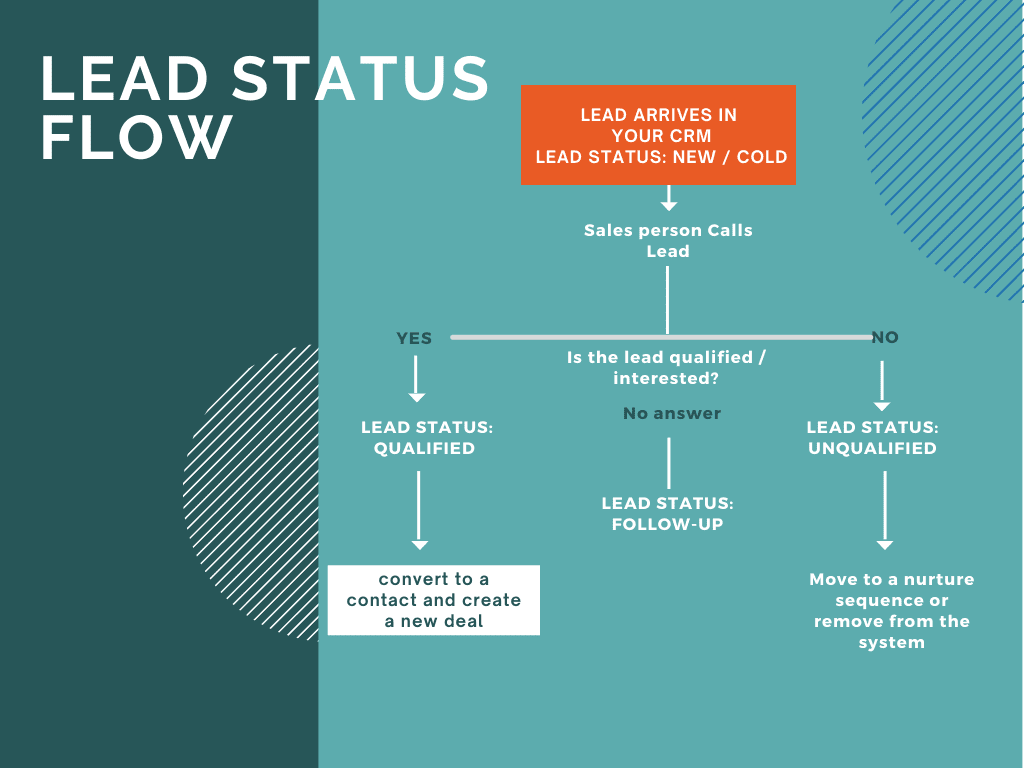
Creating a visual diagram that illustrates the full range of customer interactions, decision points, and potential paths—such as distinguishing between a complex enterprise project pipeline and a straightforward small-scale project pipeline—teams can clearly see where bottlenecks, misalignments, or inefficiencies occur.
These diagrams allow stakeholders to identify operational gaps that might not be apparent in written descriptions, such as inconsistent hand-offs between departments or missing touchpoints in the customer experience. Moreover, visual representations facilitate collaborative discussions where sales, marketing, and technical teams can jointly define ideal deal stages, ensuring alignment between business goals and technical feasibility.
For example: mapping automation triggers based on the lead status (like "automate follow-up email when lead is marked as Qualified") enables teams to build systems that respond dynamically to real-time data. This not only improves responsiveness but also ensures that user feedback is systematically translated into concrete technical requirements.
Ultimately, a well-designed visual sales journey becomes a living document that evolves with the business, serves as a communication tool across departments, and supports continuous improvement by making hidden processes visible and actionable.
4. Automated Data Cleaning and Anomaly Detection
Reducing data entry fatigue through automated data cleaning and anomaly detection significantly enhances the overall usability of your CRM. It also enables better quality data for your key performance metrics, leading to more accurate and actionable sales evaluations.
Data entry fatigue is often described as the mental exhaustion and frustration sales representatives experience when manually inputting, verifying, and formatting data. It remains one of the primary barriers to CRM adoption and consistent usage. When sales reps spend excessive time on repetitive, error-prone tasks such as entering customer details, validating phone numbers, or correcting typos, their focus shifts away from strategic selling activities, ultimately reducing productivity and engagement.
Data Enrichment & Quality: To combat this issue, businesses can integrate automated data enrichment tools that proactively improve data quality and reduce manual input. For example, platforms like Zoho’s Zia AI use artificial intelligence to automatically enrich customer records by pulling in relevant data from external sources—such as social media profiles, public databases, or industry reports. This helps the sales teams have up-to-date, accurate, and comprehensive information without needing to research or manually input it.
Tools like Never Bounce automatically validate email addresses in real time, flagging invalid or disposable addresses before they are saved into the CRM, which prevents data corruption and reduces the need for post-entry corrections.
Anomalies: Beyond data enrichment, organizations should implement automated anomaly detection systems that continuously monitor critical sales metrics such as conversion rates, average deal size, sales cycle length, and customer acquisition costs. These systems can use machine learning algorithms to establish baseline performance patterns based on historical data.
When a metric suddenly deviates from its established norm, such as a sharp drop in conversion rates or an unexpected increase in sales cycle duration, the system automatically triggers real-time alerts to relevant stakeholders. This immediate visibility creates an opportunity for fast interventions. Perhaps it has identified an underperforming sales processes or a drop in order value. Then you can create a clear action plan like retraining the sales team or adjusting outreach strategies before the issue escalates further.
Shifting from a reactive, retrospective approach where teams only review dashboards after the end of a week or month, to a proactive, real-time monitoring model empowers the teams to act swiftly and make data-driven decisions.
This reduces the cognitive load associated with data entry and it fosters a culture of continuous improvement and accountability. Ultimately, automating both data cleaning and anomaly detection not only improves data accuracy and completeness but also increases user satisfaction, boosts engagement with CRM tools, and leads to more reliable, timely, and strategic sales performance evaluations.